One museum after another – a new article on museum closure

I’ve just published a new article: Chains of closure: how collections move and change when museums close. I explore the phenomenon of museums closing and passing their collections to another museum which subsequently closes. When closures happen in succession like this, I call them ‘chains of closure’. As well as highlighting the changeability of collections, this phenomenon also challenges the idea of museums as permanent institutions. Here’s the abstract:

Hundreds of museums have closed in the UK since 2000. Some closures have led to the transfer of part or all of the collection to another museum which has later also closed, causing collections to move again. These repeated endings are described here as chains of closure, and some involve multiple museums in succession. Not only do collections move, but objects can also be transformed in the process, with results ranging from modification to decay and outright destruction. This article describes several chains of closure, from a simple example within a local authority to more complex cases, including a focus on the Commonwealth Institute and the British Empire and Commonwealth Museum. These chains of closure highlight not only that many museums are impermanent, but also that collections often outlast several museums in succession. Some museums may be better thought of as temporary custodians of collections, rather than the ‘permanent institutions’ they have been defined as.

The article is open access and free for anyone to read.
The Imperial and Commonwealth Institutes at the Design Museum

The Design Museum moved in 2016 and now occupies the building that was constructed for the Commonwealth Institute, which opened in 1962. Although the building was significantly (and controversially) refurbished so that little of the original structure remains, there are still reminders of the building’s history.

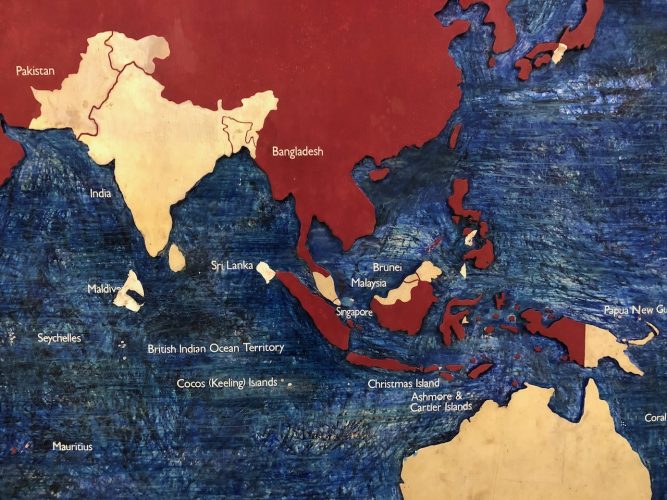
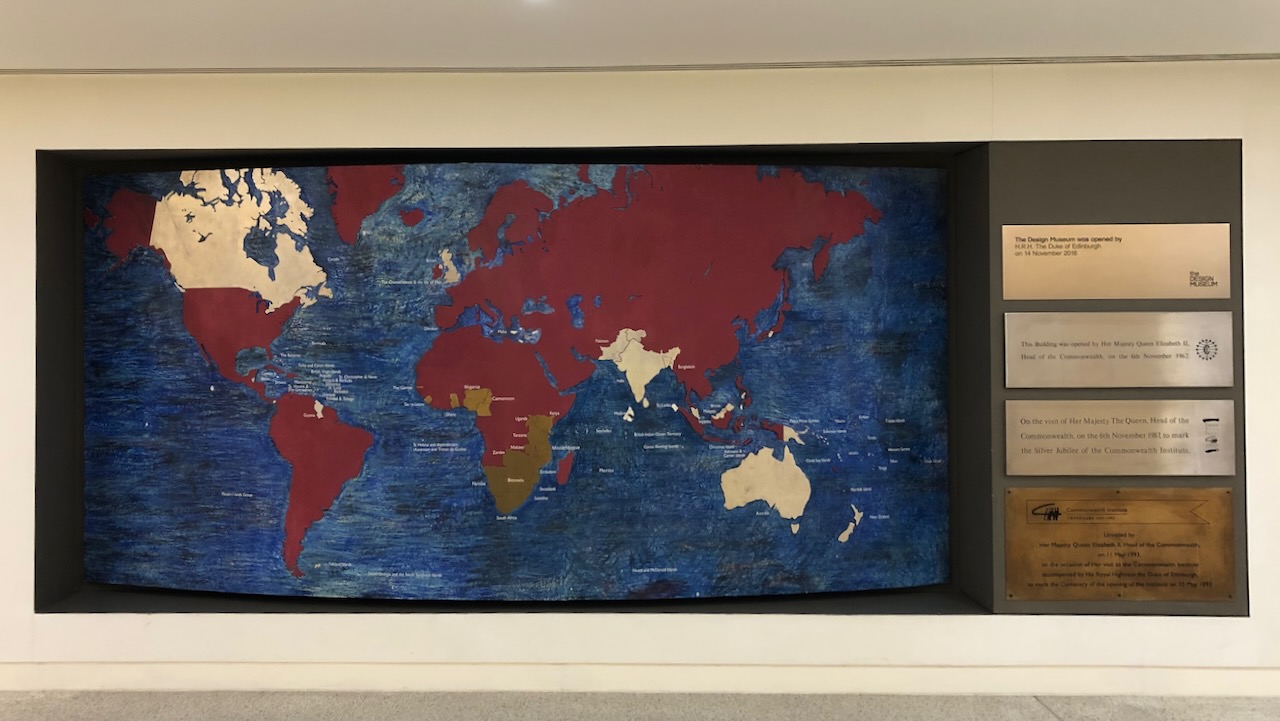
A map of the world showing the Commonwealth countries as they appeared in 1993

In the basement a gently curved map of the Commonwealth as it was in 1993 is accompanied by a series of plaques. These plaques mark the building’s history, from its original opening to the recent reopening as the Design Museum.

Close up of the map of the Commonwealth, showing amongst others India, Pakistan, Bangladesh, and Australia.
Detail of the Commonwealth map

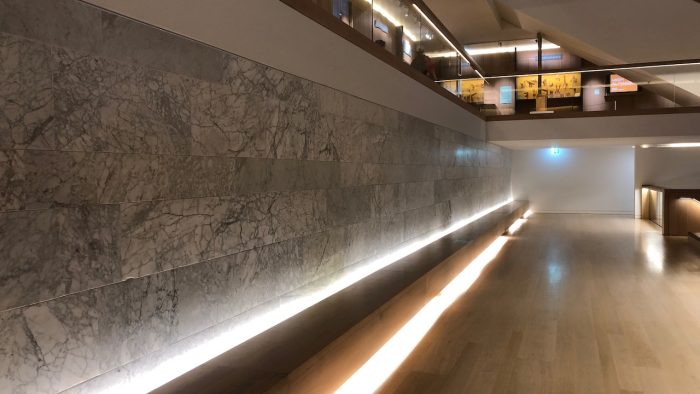
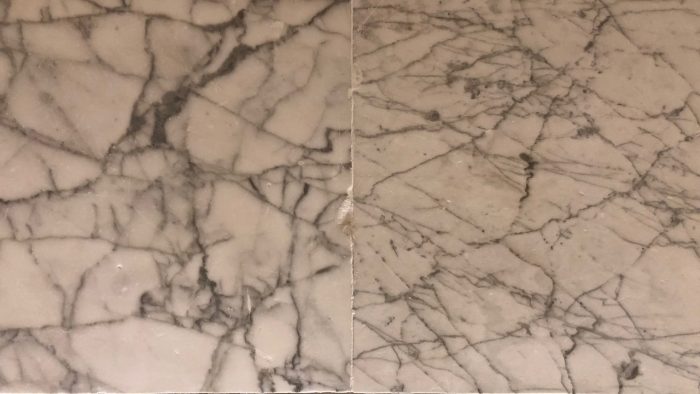
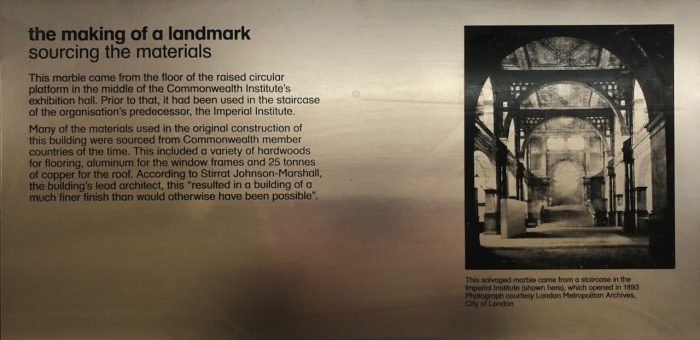
Another historic feature is on the back wall of the mezzanine level. Contrasting with the polished wood finishes throughout the museum, the mezzanine wall is entirely faced by grey flecked marble.

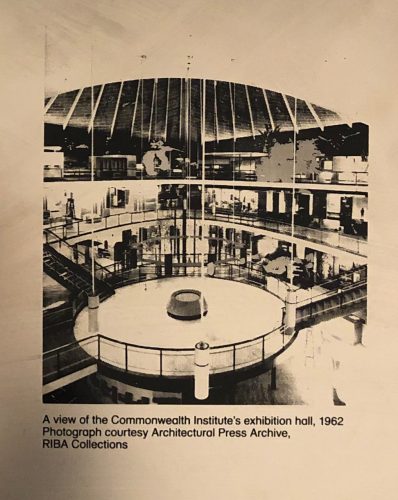
This stone was used as the floor of the circular viewing gallery at the centre of the Commonwealth Insititue. From there visitors could survey the various galleries devoted to the Commonwealth countries. That marble had originally been used for the staircases of the Imperial Institute, which stood a short distance away in South Kensington where Imperial College now stands.

The original exhibition hall, as seen on a plaque in the Design Museum
Plaque on the mezzanine bench at the Design Museum

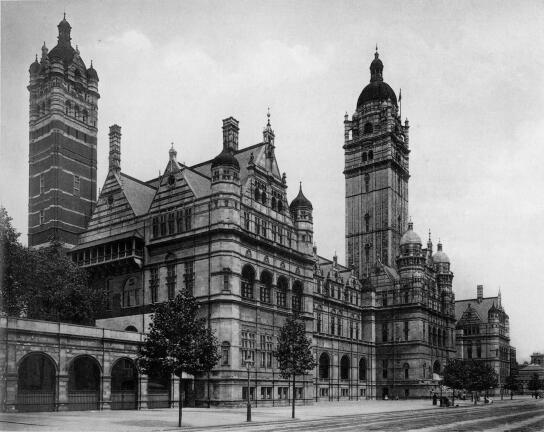
Little remains of the Imperial Institute on its original site. The only extant structure is the Collcut or Queen’s Tower (shown on the right in the picture below). The tower now stands at the centre of a quadrangle within the college, but was originally at the crossing of some of the Institute’s galleries.

As far as I know the marble wall at the Design Museum is the only other part of the Institute to remain. Despite the disquiet at the gutting of the Commonwealth Institute, at least the refurbished building contains reminders of its longer history that began in 1893 when its predecessor opened.

The Imperial Insititute in South Kensington
The Imperial Insititute in South Kensington (via Wikimedia)